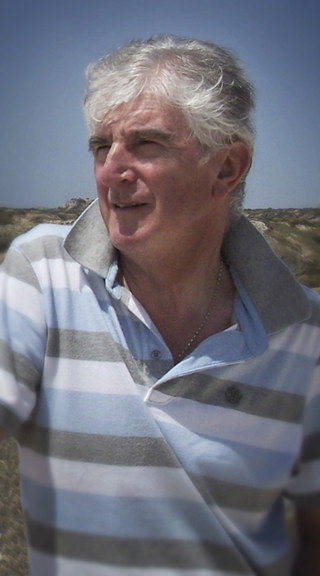
Bob Mayo’s career as a professional photographer started back in the 1950s when it was the norm to operate with wooden half-plate cameras, glass plates, sheet film, or 120 medium-format Rolleiflex. Mixing the chemistry to formula via the Kodak manuals and working in darkrooms illuminated by red, yellow or dark green safelights and then with colour film in total darkness. Shooting colour on Kodak Ektachrome 16 asa film, taking 1½hrs to process in E2 chemistry by hand in three-gallon tanks, a nightmare especially when having to remove the film to be reverse-exposed to photoflood lights. Quite a task with roll film. Shooting on location the lighting was often flash bulbs, PF100 or 60s, expensive when using up to 20 bulbs for one shot, one go with two cameras. You had to be accurate with the tape measure. Yes they were the days, thank goodness for digital.
Although a traumatic era when going through the change over to digital when a lot of photographers and processing laboratories fell by the wayside, the benefits accrued have been many giving us complete control over the final photograph, able to concentrate more on the image and not so much on the technology, I’m a great fan.
I operated as an advertising commercial photographer in the north of England, my interest in photography going back to when as a nine-year-old my father gave me my first camera, a Kodak Box Brownie. He was also a professional photographer who in 1957 started Photo Mayo Ltd a successful studio which operated for 35 years. One of my first notable pictures ‘Leazes Park Ncle’ was taken in 1951. My career started at the age of 15-years-old as an apprentice photographer, studying at night school and using mainly field cameras, 35mm was not allowed, ‘only for amateurs’. After national service in 40 Commando Royal Marines I joined my father in Photo Mayo and started to build my career, notably achieving Fellowship in the British Institute of Professional Photographers, a member of their national qualifications board, an assessor and advisor to the Newcastle College of Art photography courses and I lectured, exhibited and won a few awards on the way.
During all these years I was keenly interested in producing my own work and would whenever the opportunity arose, ‘do my own thing’. As a creative fine art photographer I have been greatly influenced by Impressionism And Abstract Art. Originally using the camera and traditional darkroom masking techniques to manipulate the photographic image, its shapes, colours and textures, now with digital technology the photographer has infinite control and freedom over his pictures and an opportunity to emulate the painter in the content of the final image.
Bob Mayo now lives and works from his studio in north-east England.